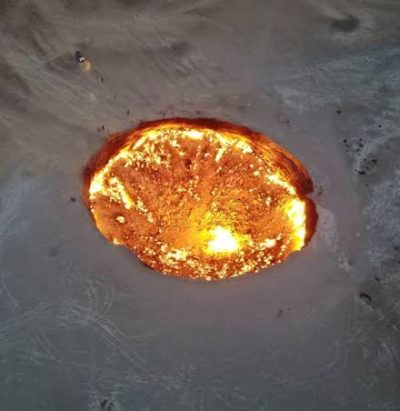
STRANGE PLACES
DOOR TO
HELL
Turkmenistan's Ever - Burning Crater
In the heart of the Karakum Desert, Turkmenistan, lies a massive gas crater
that has been burning for decades – a fiery reminder of the powerful forces
hidden beneath Earth’s surface.
QUICK FACTS
Also Known as:
Darvaza Gas Crater / "Door to Hell"
Location:
Darvaza, Ahal Province, Turkmenistan
Formation Date:
Accounts suggest 1963 or 1971 (Exact date uncertain)
Diameter:
60-70 meters (200 feet)
Depth:
30 meters (100 feet)
Main gas:
Methane (Natural gas)
BACKGROUND

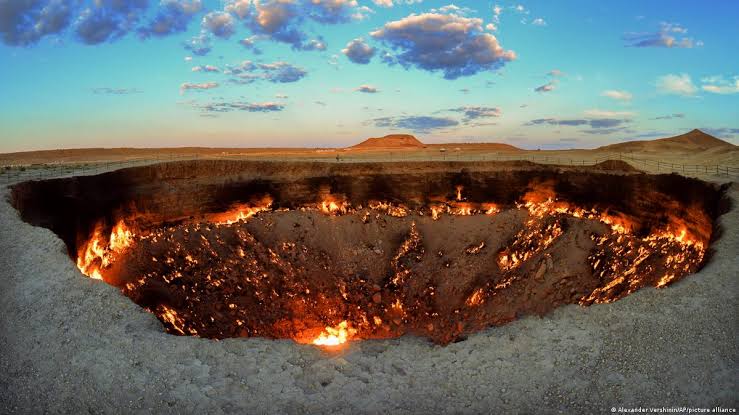
The Door to Hell is a large gas crater in the Karakum Desert, Turkmenistan. The area is rich in natural gas deposits and during Soviet times, geologists were exploring the region for potential drilling sites. What started as a drilling operation in the 1960's or 1971 led to collapse of the ground, creating a large hole filled with natural gas. According to the commonly reported account in order to prevent the spread of toxic methane gas to nearby villages, engineers ignited the gas to prevent the spread of methane, expecting the fire to burn out but it never did.
TIMELINE OF EVENTS

1963 OR 1971 Possible Formation
Different historical accounts give different dates for the collapse and crater formation during soviet-era gas drilling operations.
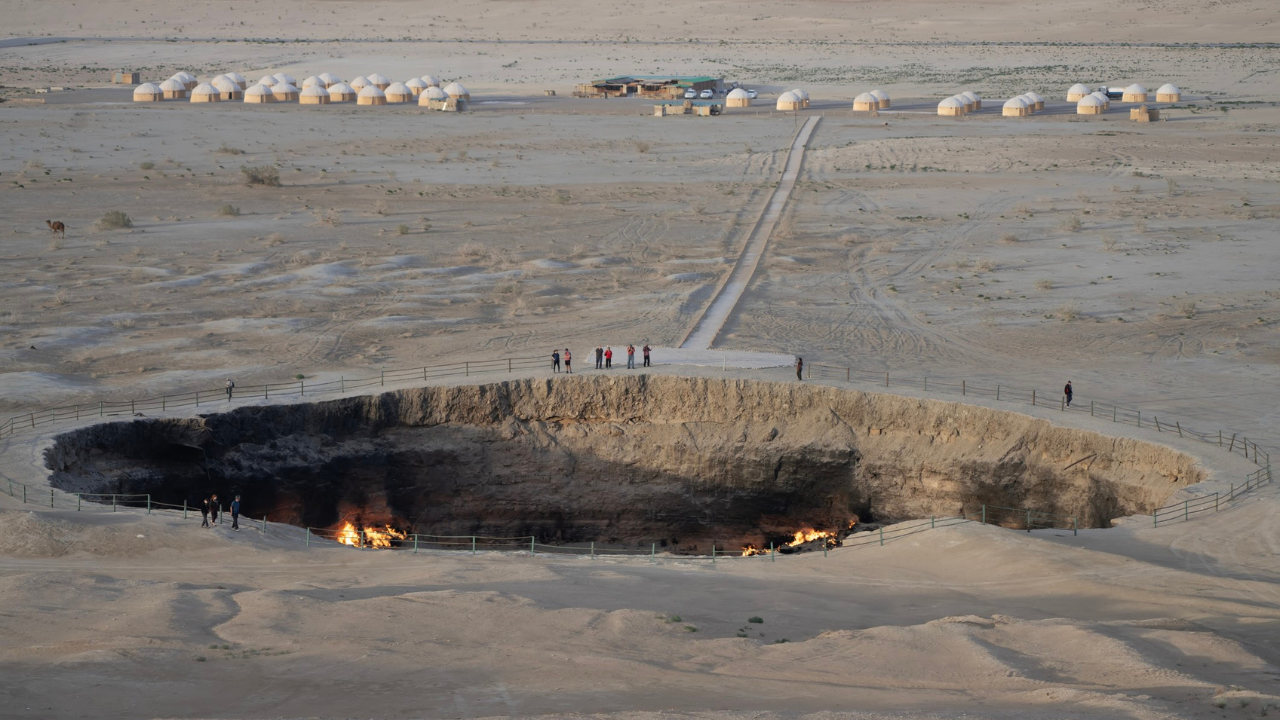
October 25, 1972 - Crater Confirmed
Landsat satellite imagery shows that the crater already existed in this date.
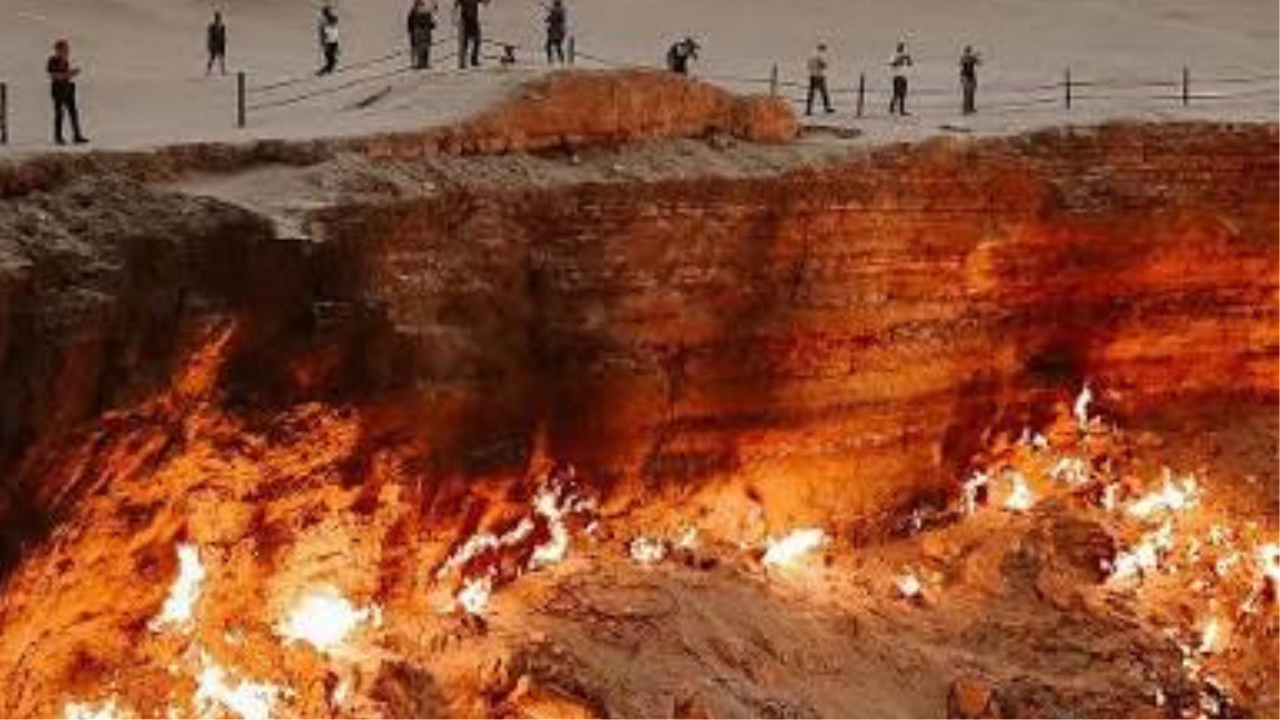
February 1987 to 1988 - Persistent Flaming Begins
Satellite analysis indicates that sustained flaring began during this period.
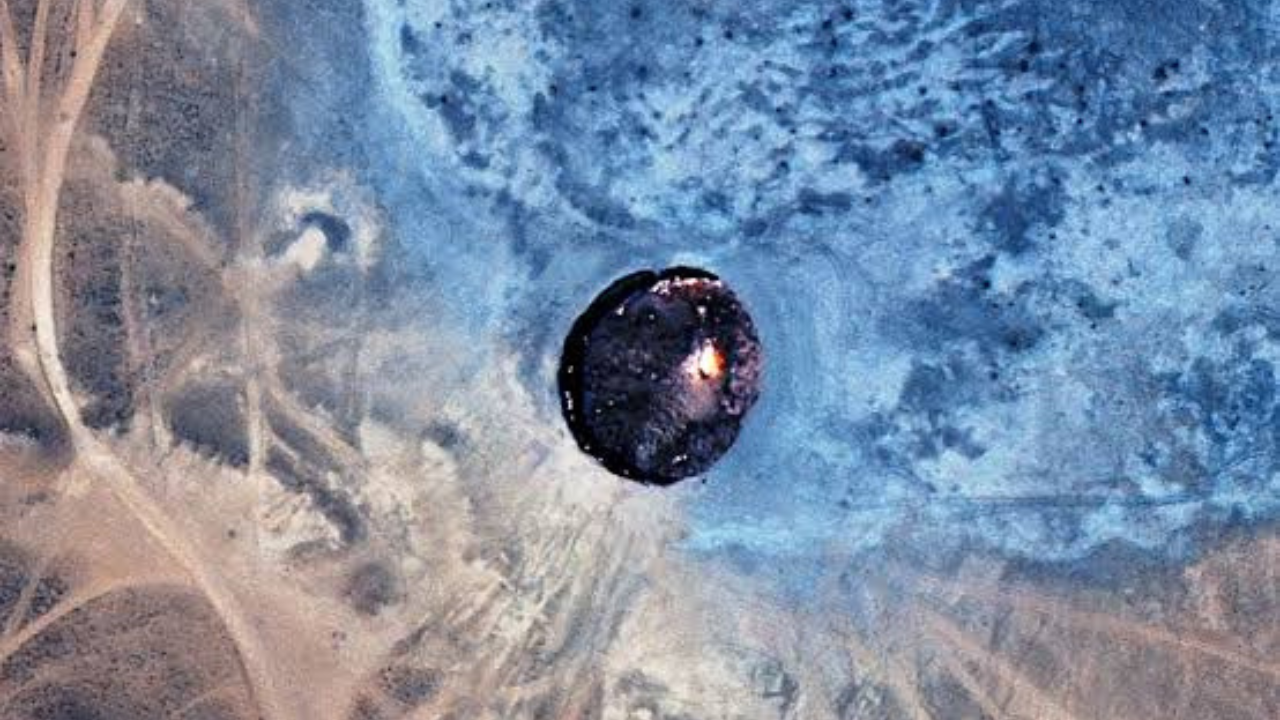
2020 - 2025 - Methane Detected from Space
Hyperspectral satellites identified numerous methane plumes and helped estimate emissions from the crater.
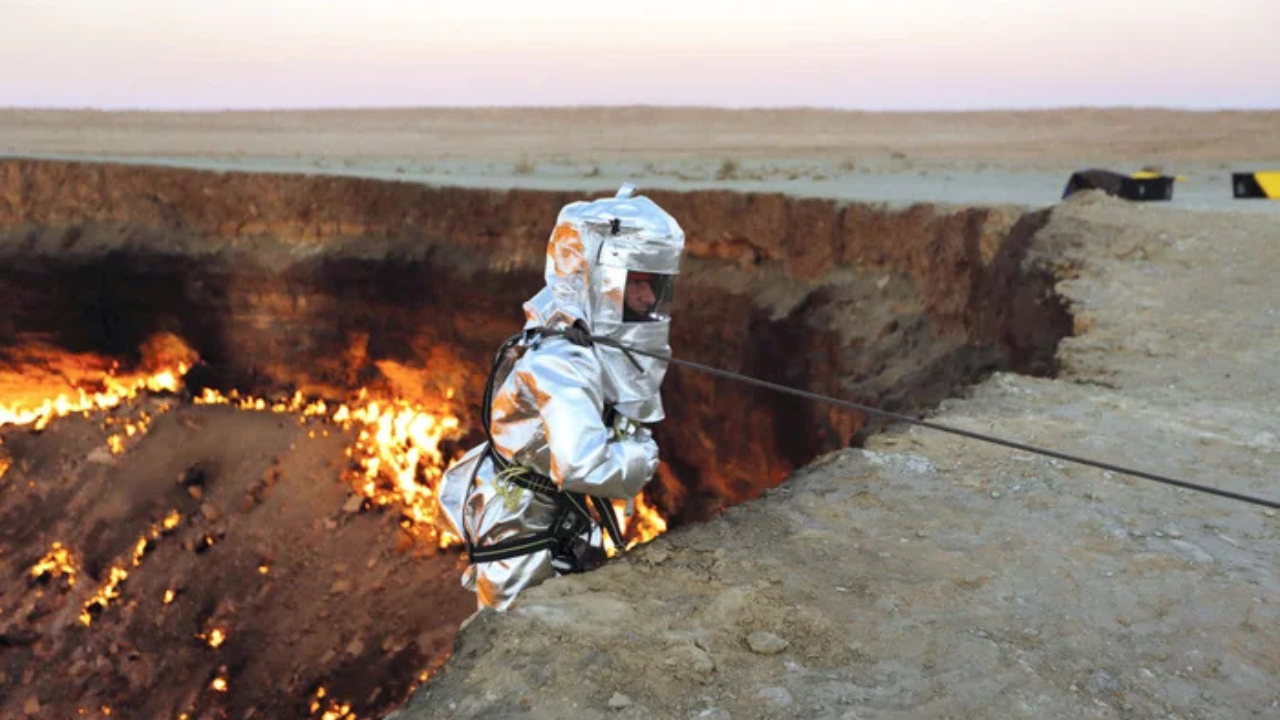
2026 - New Scientific Assessment
Researchers published a detailed satellite-based reconstruction of the crater's history and methane emissions.
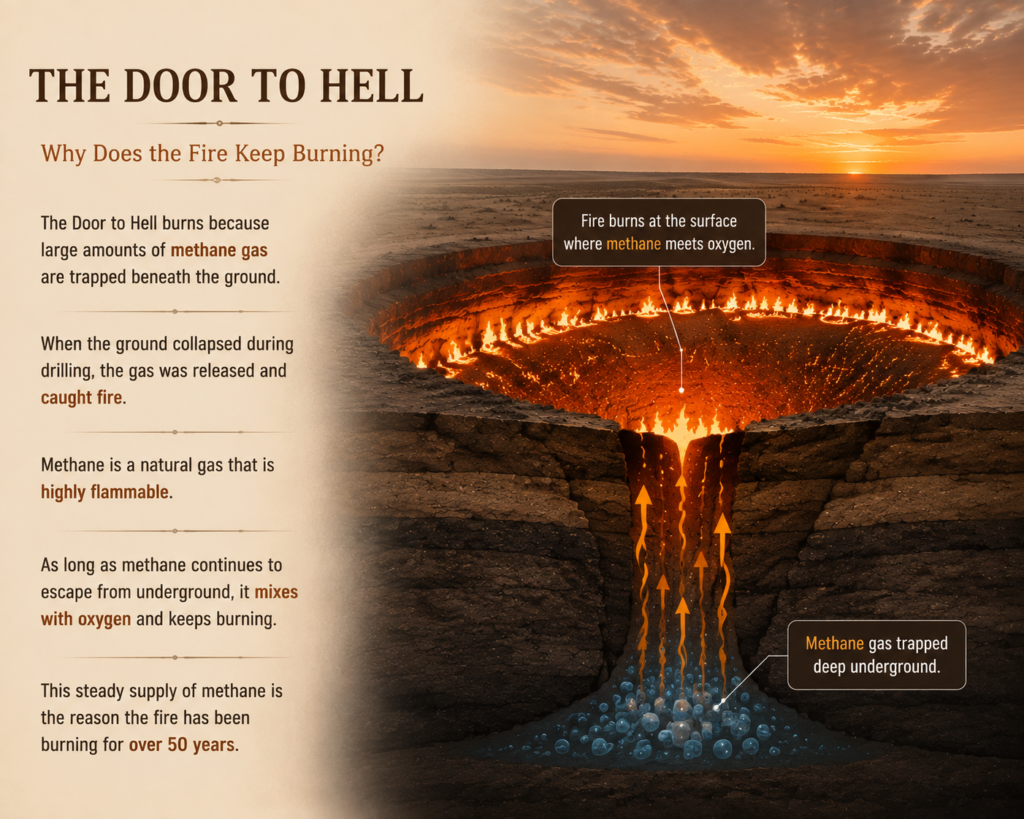
KEY EVIDENCE
Satellite Imagery
Landsat images from 1972 confirms crater's existence and newer satellites track its activity and methane emissions.
Continued Flaming
The fire has been burning persistently since the late 1980s, contradicting early expectations that it would go out in a few weeks.
Methane Emissions
Studies from 2020-2025 detected 44 methane plumes between 2020 - 2025, estimating emissions at around 1-3 tonnes per hour.
Scientific Analysis
A 2026 study in Geophysical Research Letters reconstructed the crater's history and confirmed methane emissions and combustion.
SCIENTIFIC EXPLANATION
The Door to Hell burns because large amounts of methane, a natural gas, are escaping from underground reservoirs and mixing with air. When this methane reaches the surface, it combines with oxygen and ignites, creating a continuous flame that has burned for decades.
Methane-rich gas rises from deep underground to the surface, where it burns due to exposure of oxygen.
CURRENT RESEARCH & STATUS
Scientists continue to study the Door to Hell to better understand its methane emissions, geological history and environmental impact. Modern satellite technology allows researchers to monitor the size of the flames and the amount of gas released into the atmosphere.
Environmental Impact:
Methane is a powerful greenhouse gas, and the crater's emissions contribute to climate change.
Ongoing Studies:
Researchers are using satellite data and field studies to learn more about the crater's long-term behavior.
WHAT WE STILL DON'T KNOW
Was the crater formed in 1963 or 1971 ?
How long will the fire continue to burn ?
How much methane is released into the atmosphere over time ?
What will be the long-term environmental impact of the emissions ?
WHY IT MATTERS ?

Importance
The Door to Hell is more than just a strange natural wonder - it is powerful example of how human activity and natural resources can create long-term environmental challenges for our planet.